The Productivity Trap: Why Simplicity Beats Another App Every Time
How much time did you spend this week actually creating something valuable versus configuring, updating, comparing, learning, or troubleshooting digital tools? Technology should support your workflow, not become your workflow.

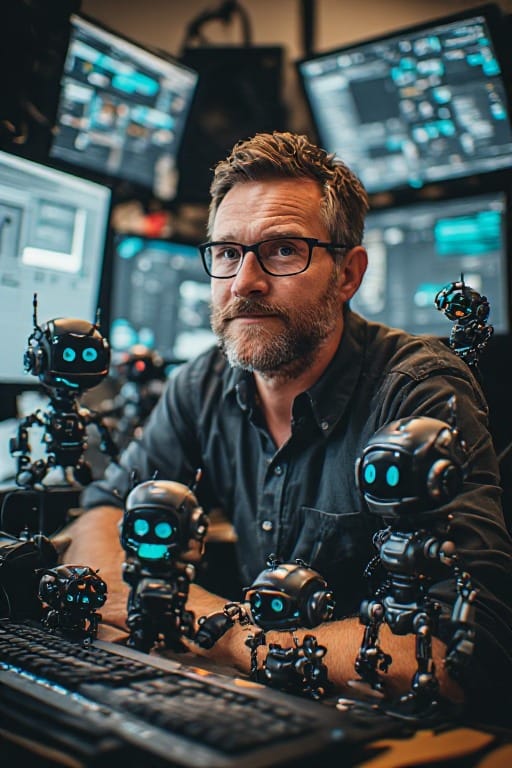
You know the feeling. Four notification badges before the coffee's even poured. A calendar app reminding you to check the app that reminds you to check your email. Somewhere in the last decade, "staying organized" became its own full-time job - and nobody agreed to the promotion.
More tools were supposed to buy back time. Somewhere along the way, plenty of us started spending our best hours managing the tools instead of doing the work they were bought for. The toolbox became the job.
They called it "getting organized." It wasn't organization. It was a second business an unpaid, invisible, running quietly underneath the one that actually pays.
Every tool added to a workflow carries a cost nobody puts on the invoice. It needs setup. It needs updates. It needs a password you'll forget in a month. It needs a subscription renewed every year whether you opened it twice or two hundred times. Multiply that by twenty different services, and a business starts revolving around maintaining software instead of serving the person paying for it.
How much of this week went into actually creating something a customer would pay for - versus configuring, comparing, updating, or troubleshooting the tools meant to help create it?
Somewhere there's a business owner who spent forty-five minutes on a Wednesday migrating a client list between two boards that do almost exactly the same thing, so a third tool could finally talk to both. Nobody billed for that forty-five minutes. Nobody remembers it happened. It just quietly became the day.
A better organizing system can't compensate for a lack of clarity about what actually needs to happen next. No amount of artificial assistance changes that - it can accelerate the writing, the research, the brainstorm, but it can't decide what's worth doing in the first place. That's still a human call, made by someone who actually knows the business.
Automation earns a reputation as the cure for busywork. Often it's something else, a more elaborate way of preserving work that never needed to exist. If a follow-up email needs three connected tools and five integrations just to fire on schedule, the real question isn't which platform to add next. It's whether the follow-up needs to exist in its current form at all.
What would this business look like with half the subscriptions it currently carries? Which one tool, mastered completely, would replace three used halfway? Which process - the weekly report nobody reads, the meeting nobody looks forward to - would nobody notice if it simply stopped?
Customers rarely ask what software runs a business. They notice something else - whether the person on the other end seems calm, or seems buried. Every extra notification, every promotional nudge, every "just one more thing" is a small withdrawal from the same account customers draw their trust from. Thoughtful communication builds loyalty. Constant communication empties the account one click at a time.
Maybe the better question isn't how often to reach out, but how often there's actually something worth saying.
The businesses that hold up over the next decade probably won't run the most sophisticated stack available. They'll run the simplest one still capable of doing the job well, and the owner will know exactly why every remaining piece earned its place.
Sometimes the fastest way forward isn't adding another tool. It's having the nerve to delete one.
None of this gets solved by finding the right app. It gets solved by knowing, specifically, what a business actually needs to run - which is a different kind of map than the one any software company sells. That map is the starting point for everything else DSL Life is built around.
Further Reading
Readers interested in exploring these ideas further may find value in:
Digital Minimalism by Cal Newport
Essentialism by Greg McKeown
The Checklist Manifesto by Atul Gawande
Useful online resources:
OpenAI – https://openai.com/
Google Workspace Productivity – https://workspace.google.com/
National Institute of Standards and Technology (NIST) Cybersecurity Resources – https://www.nist.gov/cyberframework