About
From sheet metal and seventeen years on the road to Certified Primal Health Coach — and why health sits at the center of a business community.
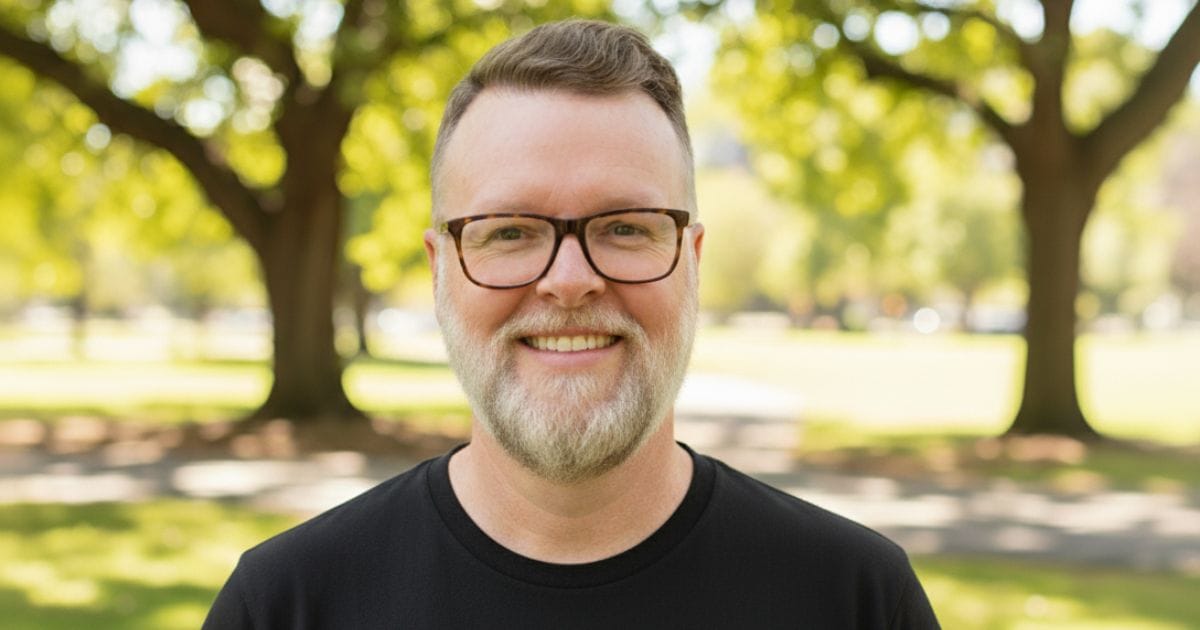
I started in sheet metal.
HVAC installation, ductwork fabrication, crawling through spaces that weren't designed for human beings. Physical, exacting work — the kind that teaches you early that precision matters and shortcuts have consequences. I didn't know it at the time, but that was my first education in systems thinking. You measure twice. You cut once. You build something that holds.
From there I spent close to seventeen years in trucking. Owned it for a stretch, drove it for the rest. If you've never been out on the road for three or four weeks at a time with two or three days home before you're back out again, the math is hard to explain to someone who hasn't lived it. You eat what's available. You move when you can, which isn't often. You gain weight in a way that happens slowly enough that you don't notice until you do. At my heaviest I was carrying 280 pounds on a five-foot-eleven frame. The business was running. I wasn't.
That's when I started paying attention to the health side — not out of vanity, out of necessity. Atkins first, which worked well enough to get my attention. Then Paleo. Then Primal. The deeper I went, the more the framework made sense — not just as a weight loss protocol but as a philosophy about how human bodies are actually designed to function. I dropped from 280 down to around 205. More importantly, I understood for the first time that physical condition and business performance aren't separate conversations. One runs the other.
Eventually I enrolled in the Primal Health Coach certification — it was called the Primal Blueprint Expert program when I started. By the time I finished, the Institute had gained accreditation and the credential had been renamed: Certified Primal Health Coach — PhC. Through the same Institute I also completed their business coaching certification, which sat alongside the Business Administration degree I'd finished while working full-time at a utility company — a long chapter of corporate customer service, billing analysis, and the particular kind of soul erosion that comes from being competent at something that was never meant to be your life's work.
DSL Life exists because of a specific observation made over a long time.
Generation X — people in their mid-forties to early sixties — is carrying an extraordinary amount of accumulated expertise. Twenty, thirty years of real-world experience in real industries, solving real problems for real organizations. That experience has genuine market value. Most of the people carrying it don't know how to package it, price it, or deliver it outside of a traditional employment structure.
Meanwhile, the tools to do exactly that have never been more accessible. A laptop, a reliable internet connection, and a clear offer is enough to build a location-independent income stream from expertise that took decades to develop. The technology isn't the barrier. The belief gap is. The question isn't whether the market will pay for what you know. The question is whether you believe it will — and whether you know how to structure it so the answer becomes obvious.
That's the work DSL Life does.
The community is built on three pillars: Digital, Startup, and Lifestyle.
Digital covers the tools and systems that make a sub-four-hour workday possible — not as a fantasy, but as a design constraint. Automation, content strategy, platform architecture, the infrastructure that runs while you're not watching.
Startup covers the strategy side — how to package what you know into something people pay for, how to launch without burning six months and a year's savings to find out if it works, how to build lean and build right.
Lifestyle is the one most business communities skip. It carries the most weight here. Health, longevity, relationships — the foundation that prevents the other two pillars from rebuilding a faster treadmill. I earned that lesson on the road, at 280 pounds, in a business that was technically working while the person running it was quietly falling apart. The health pillar isn't an afterthought at DSL. It gets more weight as you build, not less — because once the business works, living well is the entire point.
I'm not a guru who arrived somewhere. I'm a builder who's been in motion for a long time — through physical trades, through the road, through corporate, through coaching — and I built DSL Life for the people who remind me of myself at various points along that road. Experienced. Capable. Not quite sure how to translate what they've built inside someone else's structure into something that belongs entirely to them.
The convoy is the community. Nobody drives alone on a long road. That's not a motivational line — it's a practical truth about what it takes to build something real while keeping your health intact and your relationships alive.
If any of this sounds like the conversation you've been trying to have, you're in the right place.
The Open Deck is always open. The Weekly Magazine arrives every Friday. And if you want to understand whether DSL fits where you're going, a Discovery Call is one conversation with no obligation on either side.
Pull up a chair.
— Rez
I am based in New York City. I read every reply to every email. The Subscribe button on this site connects you to The Read and a short series of personal letters I wrote about why I built this. That is the best way to get to know me and what I am building.
— Rez Certified Primal Health Coach · Business Coach · Founder, Digital Startup Lifestyle
Also on Blast Radio and StationHead
