
So You Want to Run a Radio Show? — A practical guide to broadcasting in the age of licenses, platforms, and creative freedom
Internet radio isn't hard because the technology is complicated. It's hard because licensing is a decades-old legal architecture nobody simplified. Here are the three models independent creators are using — and where to start listening.

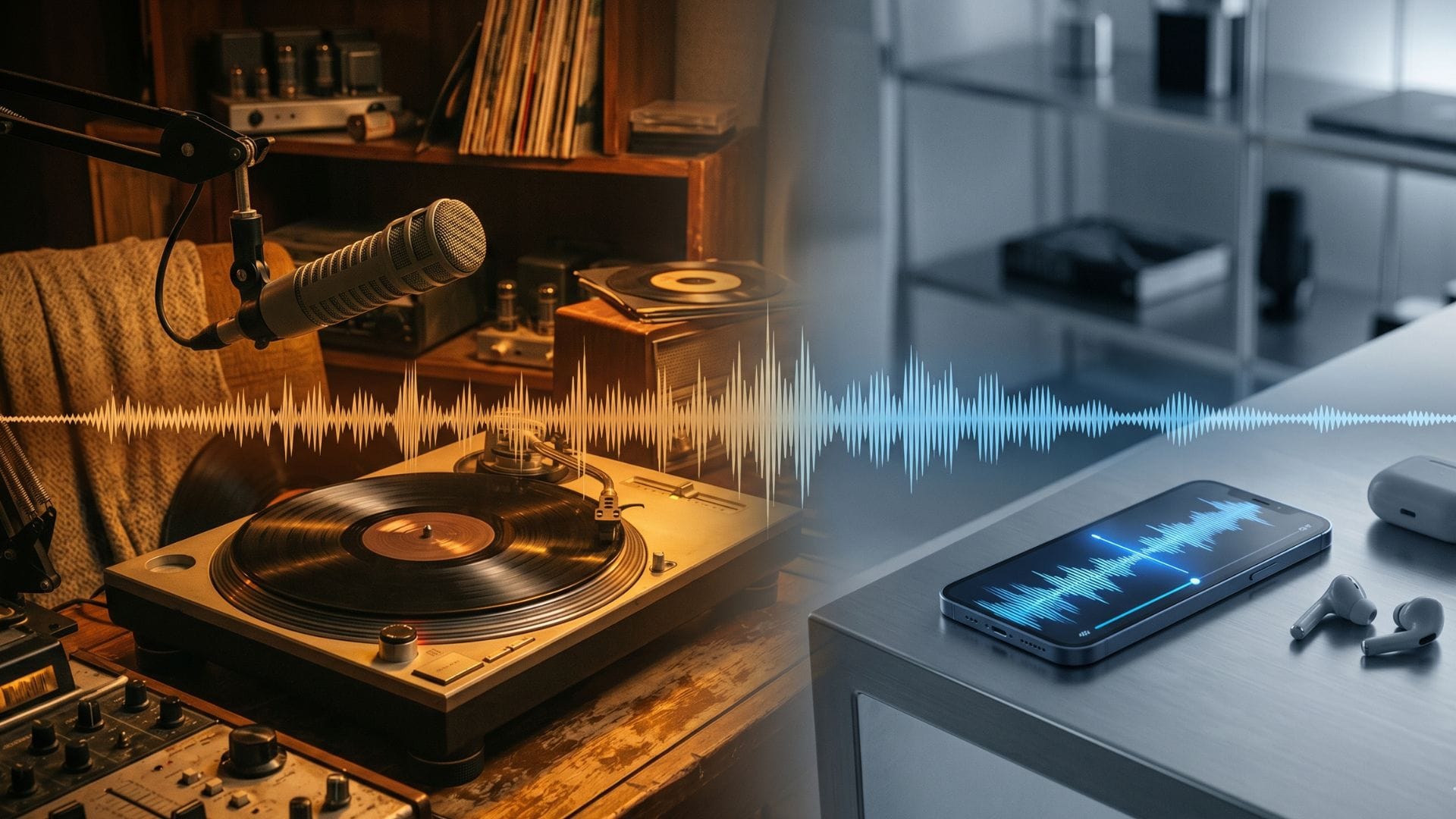
The desire is straightforward: you want to share music you love, build an audience around your taste, and create something that feels like those late-night radio shows that shaped you. A voice. A point of view. A curated experience that's distinctly yours.
The infrastructure to do it? Less straightforward.
Here's what nobody tells you upfront: internet radio isn't complicated because the technology is hard. It's complicated because music licensing is a decades-old legal architecture that the internet didn't simplify — it just moved the walls around.
The good news is that three workable models have emerged for independent creators. Each one handles the rights question differently. Each one involves a different trade-off. Knowing which fits your situation is the difference between building something sustainable and building something that gets shut down.
Model One: The Listener Brings the License (Stationhead)
Stationhead's approach is elegant in its simplicity. To listen to your show, your audience needs their own paid Spotify or Apple Music account. You're not broadcasting copyrighted music to the public in the traditional legal sense — you're hosting a listening party where everyone is streaming through their own subscription.
The rights question gets pushed to the listener, not the broadcaster.
What this means practically: your show is gated. Anyone without a qualifying subscription can't tune in. That's a real friction point for audience building — you're not accessible to everyone, only to people already inside the approved ecosystem.
But the trade-off is clarity. You operate cleanly. No licensing headaches. No takedown risk. Maximum compliance with minimum complexity.
Best for: Creators who prioritize sustainability and clean operations over maximum reach. If you're building a premium, niche audience that already lives inside streaming platforms, this friction may cost you very little.
Model Two: The Ephemeral Broadcast (Blast Radio)
Blast Radio operates in a different part of the legal landscape — specifically, the DMCA's "notice and takedown" framework. Under this model, if a rights holder has an issue with music that aired on your show, they must file a complaint. You get notified, and you have a window to address it.
Blast's workaround is almost poetic in its simplicity: the broadcast is ephemeral. Your show lives for roughly 24 hours, then disappears.
By the time anyone files a complaint, the content is already gone.
It's closer in spirit to traditional over-the-air radio — experienced in the moment, not collected as a permanent artifact. There's something intentional about that. In a content landscape obsessed with archives and evergreen assets, a show that only exists while it's happening carries its own kind of cultural weight.
Blast does archive a private copy for your own records. What you do with that archive is the next decision.
One practical note worth knowing: Blast Radio includes a discovery feature that lets listeners slide between live shows in real time — if a show doesn't grab them, one swipe moves them to the next one. For new broadcasters, that's organic discoverability built into the platform itself.
Best for: Creators who want the live, spontaneous energy of traditional radio without building a permanent catalog. If the experience of the show is the product — not the archive — this model fits.
Model Three: The Licensed Archive (Mixcloud)
Here's where the two models above converge into something more durable.
If you broadcast live via Blast, your archived recording can find a permanent home on Mixcloud — a platform that handles music licensing directly, particularly for DJ-style and curated content. Paid subscribers on Mixcloud can build a proper catalog without managing individual track clearances themselves.
The workflow: Go Live → Let Broadcast Be Ephemeral → Archive Privately → Publish Where Licensing Is Handled
It's not romantic. But it works. And it gives you the two things every creator-as-business needs: a live presence and a permanent asset.
Mixcloud does offer limited free access — enough to test the waters — but a paid subscription is where the real catalog-building happens. Factor that into your creator business model from the start, not as an afterthought.
Best for: Creators who want both the live experience and the durable archive. This is the most complete model for anyone treating their show as a long-term content asset.
How to Choose
The right model isn't about which platform is "best." It's about which trade-off fits where you are right now.
Ask yourself three questions:
Is my audience already inside the streaming ecosystem? If yes, Stationhead's friction is manageable. If you're trying to reach people who haven't paid for Spotify, you're building with a smaller funnel.
Is the live moment the product, or is the archive? If the experience is the point — the energy, the spontaneity, the "you had to be there" quality — Blast's ephemeral model is philosophically aligned with what you're building. If you're building a catalog people return to, you need Mixcloud in the workflow.
What's your tolerance for operational complexity? Stationhead is the cleanest single-platform solution. The Blast-to-Mixcloud pipeline requires managing two platforms and understanding how they interact. Neither is technically difficult, but one requires more intentional workflow design.
Worth Your Ears
The best argument for any platform isn't the model — it's the people already building on it. Here's where we'd point you first.
On Stationhead: RadioTed57 is a reliable starting point for discovering what a well-curated show sounds like. Hambonz brings consistent energy. 17Kandles skews toward an era and sound that Gen X will recognize immediately. AaronsRadioShow and JustinOnAir are worth exploring if your taste runs toward classic material. AnnasoLatia holds her own alongside any of them. DreamWarrior and RockMetalNation are exactly what their names suggest — no ambiguity, no apology. JohnTT, PMO, and EddiesAudibles round out a strong starting list.
A few that deserve specific mention: Arturoian has built a presence across both Stationhead and Spotify — worth following on both. Rich Pasternack is in a category of his own: a broadcaster with thousands of vinyl LPs who plays from a real physical collection, primarily on Blast Radio but also present on Stationhead. He's proof that the medium has genuine depth. And ThePainkiller is the kind of connector every community needs — once he decides he likes your work, he shares it regardless of genre, because he's backing the creator, not just the content. That's rare.
On Blast Radio: Gegenkoerper is worth your time. 5YN7AXRadio, a creator out of Brooklyn, is one we've started following closely. Uncle Dandy brings his own distinct flavor to the platform. And Derrick May — yes, that Derrick May, one of the founding architects of Detroit techno — is broadcasting here. That alone tells you something about where serious music culture is finding a home. RadioTed57 and Rich Pasternack appear here as well — further evidence that the serious broadcasters aren't limiting themselves to one platform. @getrocked does exactly what it promises.
And yes — DSLRadio is our channel on Blast Radio, and DSLmag is our home on Stationhead. We're not observers of this space. We're in it.
This community is bigger than any one list. If we missed your show, it wasn't intentional — find us on Stationhead or Blast and introduce yourself. We're always listening.
The Bigger Picture
Whatever model you choose, one principle applies across all three:
The platform handles some of the rights complexity. You still own the show.
Your voice, your curation, your point of view — none of that lives in a licensing agreement. The music is the raw material. What you do with it, how you sequence it, what you say between tracks, why these songs belong together — that's the product. That's what builds an audience that follows you, not just a playlist.
In an era when algorithms can generate a playlist in seconds, the human who can make music mean something in a sequence is not a relic.
That's a competitive advantage.
Build the show like one.