Gratitude as a Business Practice: Why the Most Resilient Founders Build It In
So it's worth asking: what is still working in your business that you haven't looked at lately?


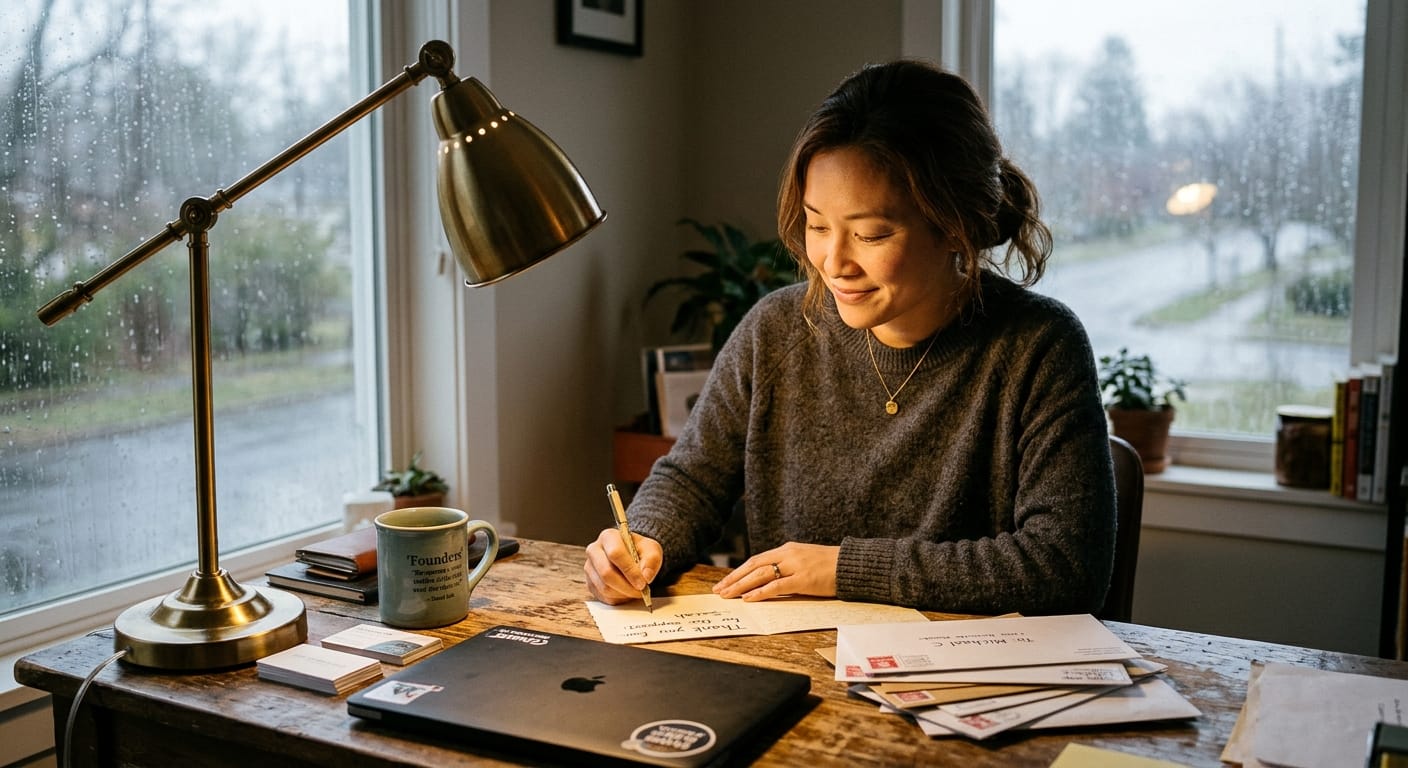
The quarter was bad, and the owner of a small print shop knew exactly how bad. Two large orders had cancelled. A machine needed repair. On a rainy Thursday evening, instead of opening the accounts again, she wrote two lines to the paper supplier who had quietly stretched her payment terms the month before. Thank you for the room. I won't forget it.
Then she did something else. For ten minutes, she wrote down what had actually held up that quarter. The regular customers who kept ordering. The employee who covered a shift without being asked. The one machine that never broke.
The next morning, her decisions looked different. Not rosier. Clearer.
Gratitude is usually described as a feeling, and feelings are unreliable. What the print shop owner did was closer to an inventory: an honest look at what was still standing. When a business is under pressure, the mind fixes on what's missing and tends to treat everything else as invisible. Taking stock of what remains restores proportion, and proportion is what good decisions are made from.
The note matters too, but not for the reasons people assume. It isn't politeness. It reminds both people that the relationship is real, and relationships are what a business leans on in a hard quarter.

So it's worth asking: what is still working in your business that you haven't looked at lately? Who gave you room when you needed it, and do they know it? What would it change about your next decision to see the whole picture, instead of the one hole in it?
The print shop owner never made it a ritual. She just found that when things were worst, ten minutes and two lines were enough to see clearly again.